





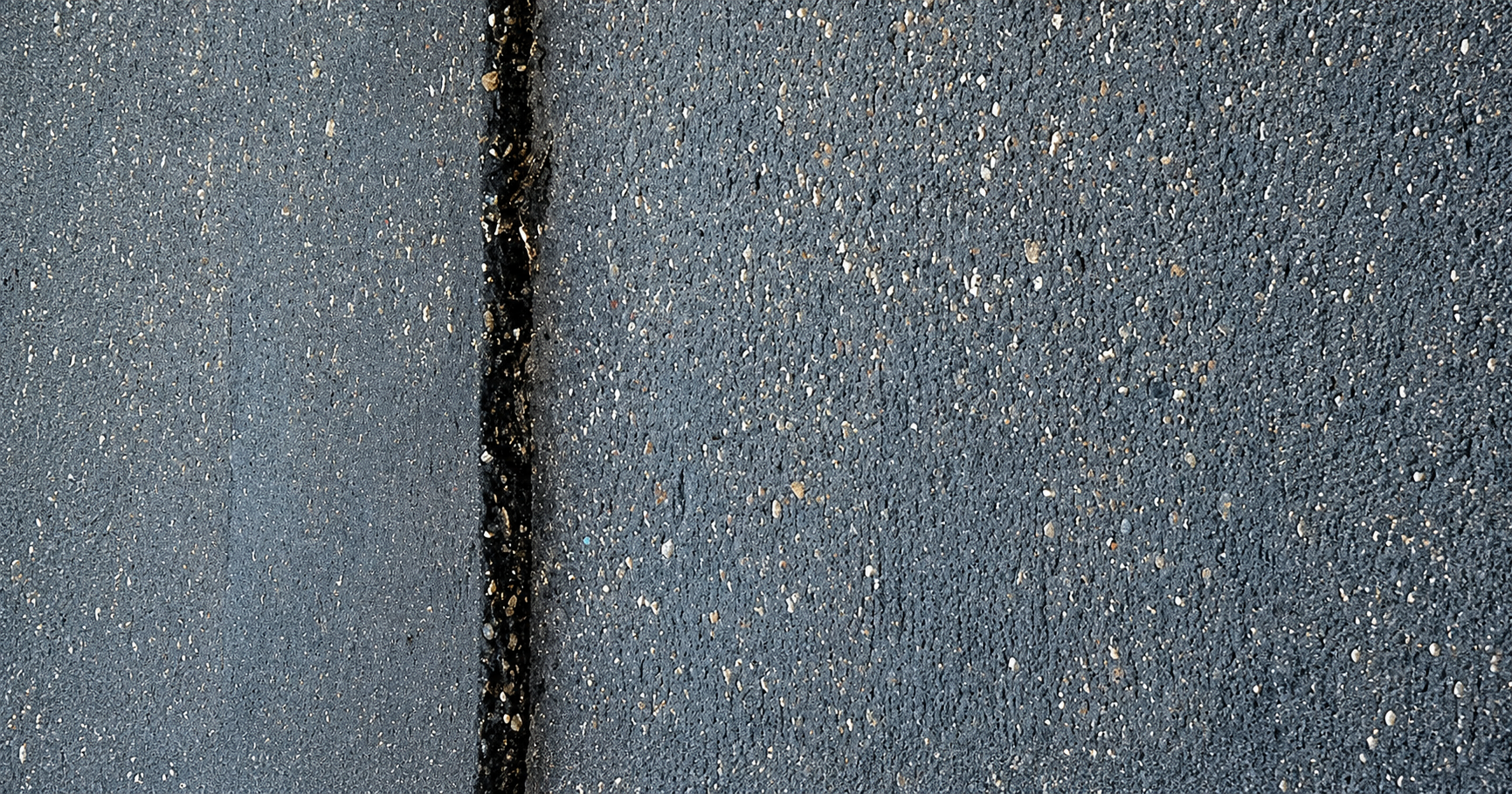
A subsided concrete floor causes problems on the shop floor. Height differences hinder forklift trucks, cracks become noticeable, and doors or machines no longer line up properly. In a warehouse, distribution centre or production hall in particular, this has a direct impact on how the space can be used.
But what makes a concrete floor subside? And what can you do about it?
The cause often lies in the subsoil. When layers of sand or soil compress, were insufficiently compacted or are washed away by water, the concrete floor loses its support. The floor then sinks locally or over a larger area.
In this article you will read how to recognise a subsided concrete floor, what causes the subsidence and which repair options are available.
How do you recognise a subsided concrete floor?
A subsided concrete floor is not always immediately recognisable. Watch for the following signs:
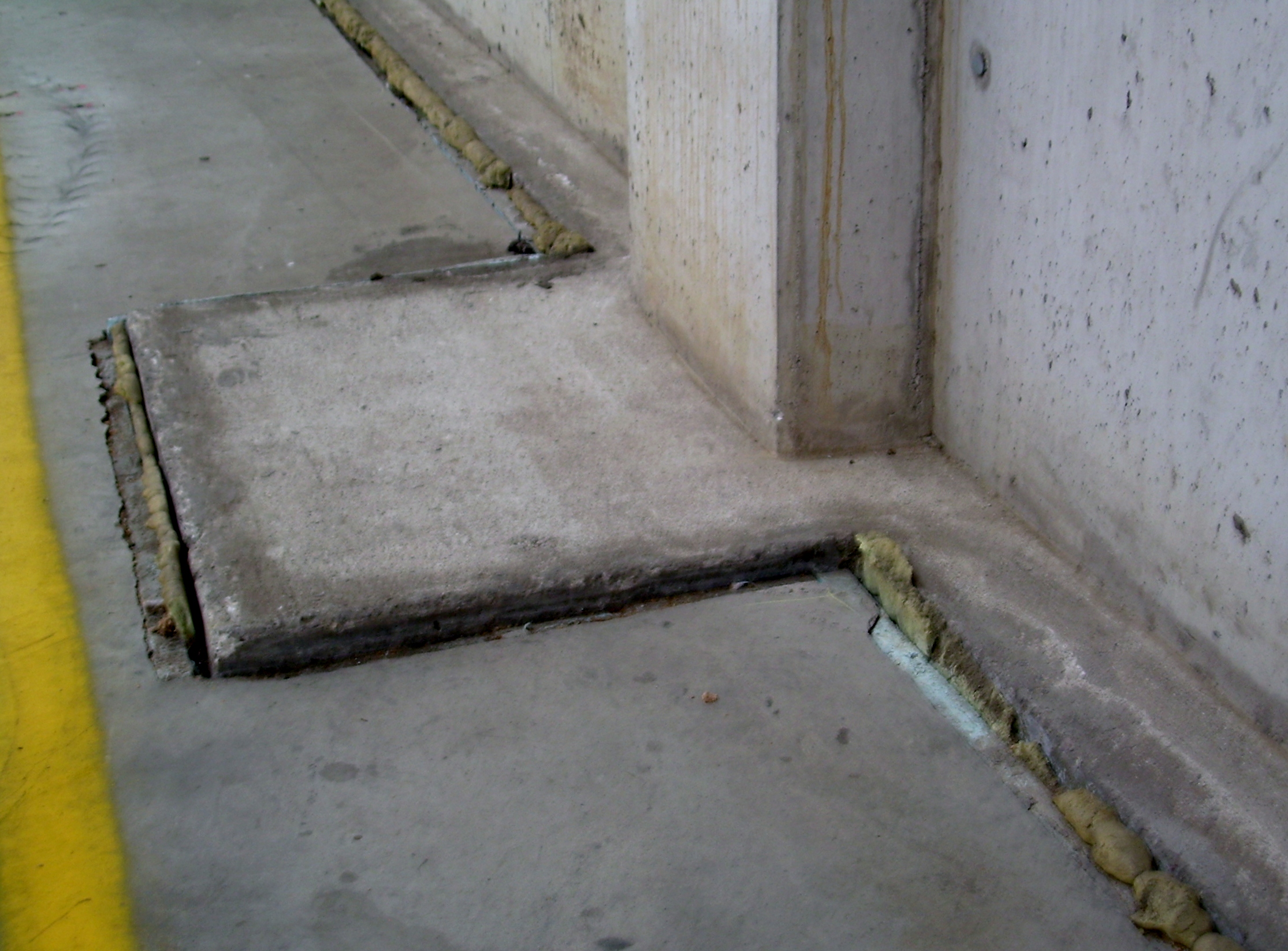
- Cracks in the concrete floor: cracks stand out in the floor surface or at the junctions with walls and columns.
- Height differences: floor sections are no longer at the same level. This creates uneven transitions and thresholds.
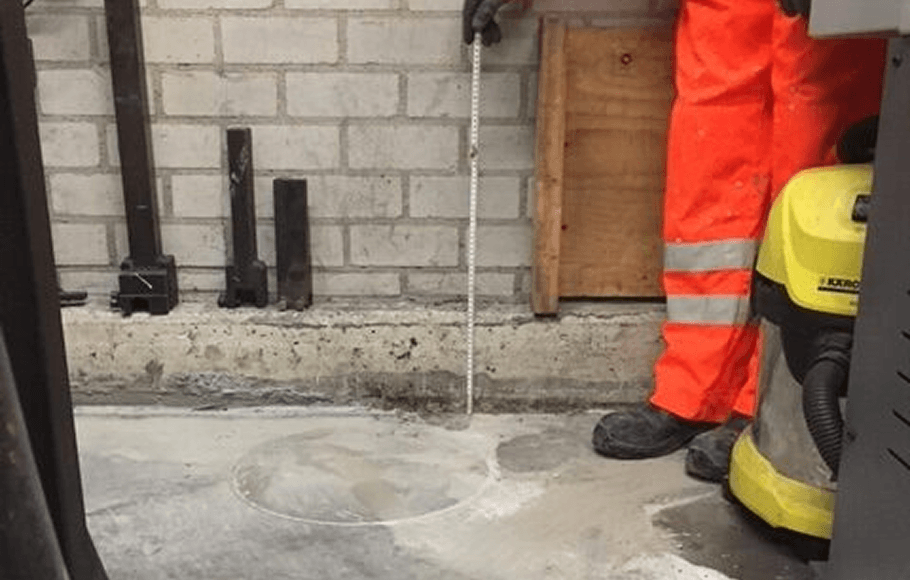
- A hollow sound: part of the floor sounds different when you walk on it or tap it. This can point to missing support beneath the concrete.
- Problems with doors or machines: an uneven floor affects how doors, machines and other installations fit.
- Disruption to transport: forklift trucks and other transport equipment are jolted when they drive over height differences.
These signs are a reason to investigate the floor further. A crack or a hollow sound does not automatically mean the concrete floor has subsided. A technical assessment of the floor and the subsoil can clarify the cause.
Is there actually subsidence? Then raising the concrete floor with foam concrete injections may be a suitable solution. This stabilises the floor and, where necessary, brings it back to the desired level, without extensive demolition work.
What causes a concrete floor to subside?
Ground settlement occurs when the soil beneath a structure compresses, shifts or loses bearing capacity. This is a natural process that is already taken into account at the design stage in construction. When the settlement is uneven or unexpected, it can lead to problems such as subsided floors or foundations.
A concrete floor does not usually subside because of the concrete itself, but because of changes in the subsoil it rests on. When the bearing capacity of this subsoil decreases, the floor can start to sink or end up uneven.
Common causes are:
1. Soil compression and uneven settlement
After a building or concrete floor has been constructed, the subsoil changes. Soil layers end up closer together. We call this settlement.
With uneven settlement, height differences arise. One part of the concrete floor then ends up lower than the rest. In a warehouse, you see this in floor sections that are no longer at the same level.
2. Insufficiently compacted soil layers
When a concrete floor is laid, the sand and soil layers must be sufficiently compacted. If this is not done properly, the soil compresses further later on.
The support beneath the concrete floor changes and the floor sinks with it. Height differences arise especially when the compaction is not uniform everywhere.
3. Washout caused by leaks or water
Leaks, water flows and poor drainage cause problems when soil particles are washed away from beneath the concrete floor.
This creates space beneath the concrete and reduces the support. The floor sinks in the places where the subsoil changes.
With a subsided concrete floor, it is therefore important to also check the water management around the building. A leak or drainage problem must be dealt with before the floor is repaired. Spotting these symptoms in good time can limit further damage and often makes repair simpler.
HoWhat risks does a subsided concrete floor carry?
A subsided concrete floor affects the safety and use of your business premises.
Safety on the shop floor
Height differences are a tripping hazard for employees. Transport equipment also encounters unexpected transitions and jolts. The severity of the risk depends on the height differences, the location and how the floor is used.
Disruption for forklift trucks and machines
In a warehouse with a subsided concrete floor, height differences cause jolts while driving. Machines that need a flat, stable base also run into problems when the floor is no longer at the right height.
Read more about floor repair for distribution and industry.
Problems with doors, racking and installations
An uneven floor affects how doors, machines and other installations fit. Think of doors that no longer close properly or machines that need to be realigned.
Consequential damage and business continuity
If the cause of the subsidence is not addressed, the subsoil keeps changing. The subsidence develops further or becomes visible in other places. This leads to additional repair work and disruption to operations.
If the subsidence is increasing quickly or safety is at risk, a technical assessment is essential.
How do you repair a subsided concrete floor?
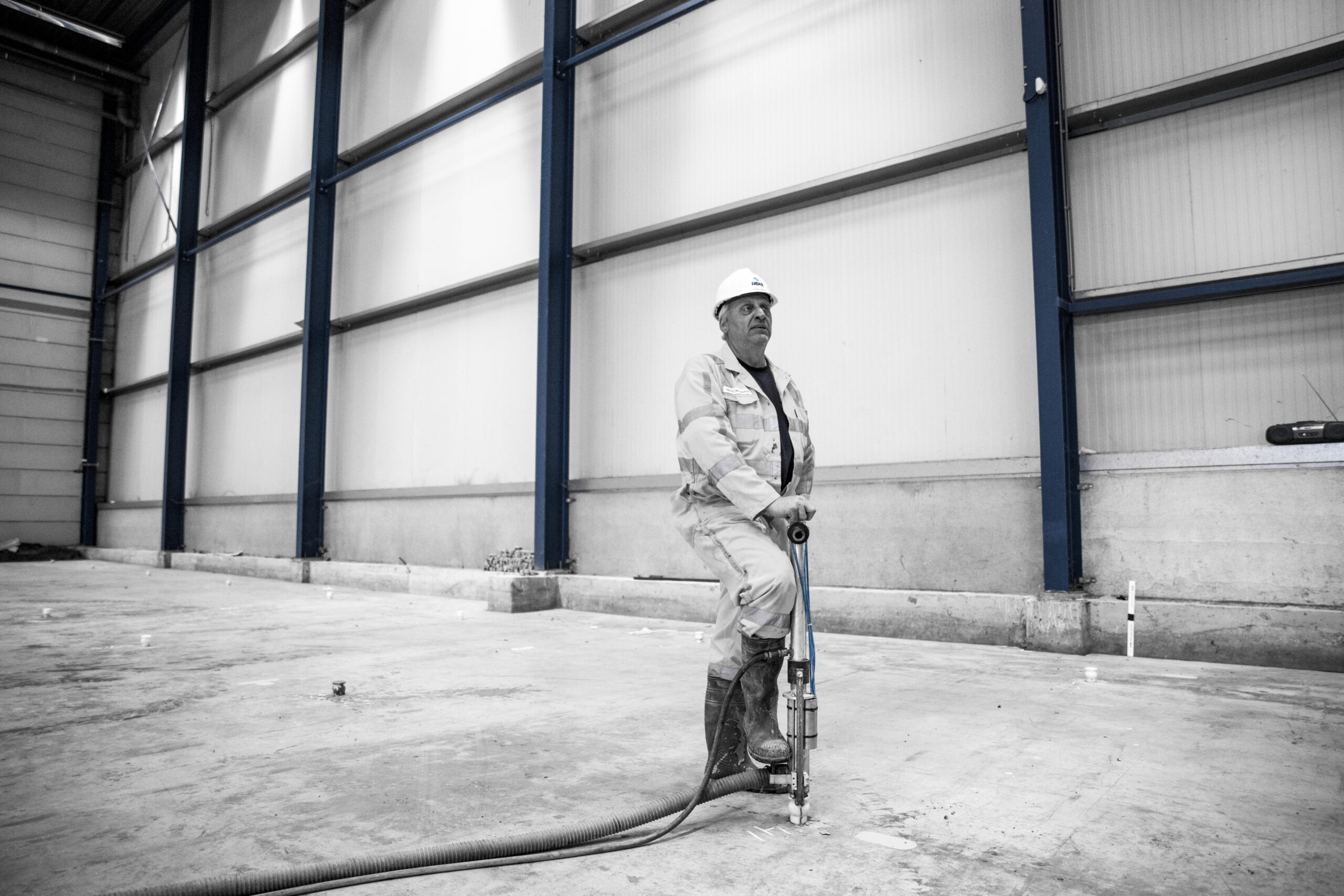
The right repair method depends on the cause, the condition of the concrete floor and the degree of subsidence. That is why repair starts with an assessment of the floor and the subsoil. On that basis we determine which approach suits the floor and the situation. See the working method of Faber Vloerliften.
Filling voids and stabilising the floor
Where voids exist beneath the floor, the support must be restored.
For a suitable floor, an injection technique can be used to fill the space beneath the concrete. Stabilisation improves the support beneath the floor and aims to prevent further movement.
Which technique is suitable depends on the subsoil and the cause of the subsidence.
Lifting the concrete floor in a controlled manner
Is the concrete floor structurally intact but locally lower than desired? Then controlled floor lifting is a possible solution.
With this method, the floor is brought to the desired height. Faber Vloerliften assesses whether your concrete floor is suitable for lifting and which approach fits your situation.
See the options for raising concrete floors.
Concrete repair or structural restoration
When the concrete floor itself is damaged, the concrete needs to be repaired.
Where there is severe structural deterioration, a different form of repair or replacement is needed. Repairing only the visible damage does not automatically solve subsidence.
Decision guide: which solution suits your subsided concrete floor?
| Situation | Possible next step |
|---|---|
| Small height difference with no visible progression | Have the situation assessed and monitor it if necessary |
| Voids beneath the concrete floor | Have support and stabilisation investigated |
| Structurally intact floor that has subsided locally | Have controlled floor lifting assessed |
| Cracks with movement or increasing subsidence | Have the floor and subsoil technically assessed |
| Severe structural deterioration | Have structural repair or replacement investigated |
The technical assessment determines which repair method is suitable. The cause, the condition of the concrete floor and the subsoil are decisive.
Curious what this looks like in practice? Discover how Faber Vloerliften repairs subsided floors in different situations.
When should you call in Faber Vloerliften?
Do you have a subsided concrete floor in your warehouse, distribution centre or industrial building? And do you notice that the floor is causing problems in your daily operations?
Faber Vloerliften assesses the situation and checks whether your concrete floor is suitable for lifting. If the floor structure and subsoil are suitable, floor raising brings the floor back to the desired height.
Would you like to know what is possible with your floor?
See the options for raising concrete floors or contact Faber Vloerliften for an assessment of your situation.